
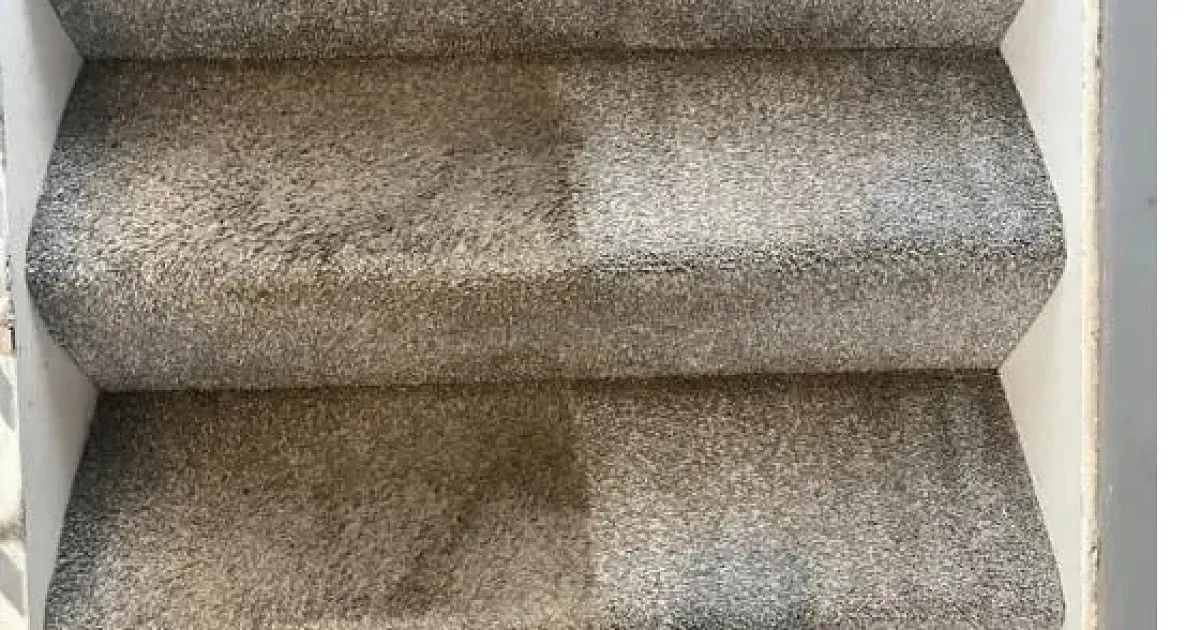
How Erie Winter Road Salt Damages Carpet
Salt crystals are hard and angular, so they abrade carpet fiber with every footstep rather than simply staining it. Across roughly 91 snow days a year, that abrasion is what shortens carpet life in Erie, and vacuuming does not remove it.
Road Salt Carpet Damage: Why Salt Is Abrasive
The white residue people notice is the least important part. What shortens carpet life is that salt crystals are hard and angular, and they sit at the base of the pile getting stepped on all winter.
Erie averages roughly 104 inches of snow a season (NOAA 1991-2020 normals), and Erie County roads get about 27,500 tons of salt a year (PennDOT, 2017). That is months of salt arriving on shoes, boots and paws, every day, into the same entryways.
| What salt does | Why it matters |
|---|---|
| Abrades the fiber | Hard, angular crystals grind against fiber with every footstep. This is cumulative and permanent. |
| Attracts moisture | Salt is hygroscopic. A salted entry stays slightly damp, which holds soil and can turn musty. |
| Leaves chalky residue | The visible white bloom, which recrystallises as it dries and resists vacuuming. |
| Reaches tile and grout | Settles into porous grout, holds moisture there, and discolours it. |
How Exposed Is Your Entryway?
Three questions gives you a risk level and the specific changes worth making before spring.
How Exposed Is Your Entryway?
Three questions gives you a salt risk level and what to do about it before spring.
Why Vacuuming Does Not Get It Out
This is the part that surprises people who vacuum diligently all winter and still find their entry gritty in March.
Salt arrives dissolved in slush. As that moisture evaporates, the salt recrystallises inside the carpet fiber rather than sitting loose on top of it. A vacuum removes loose particulate. It does not remove crystals that have formed around and within the fiber structure.
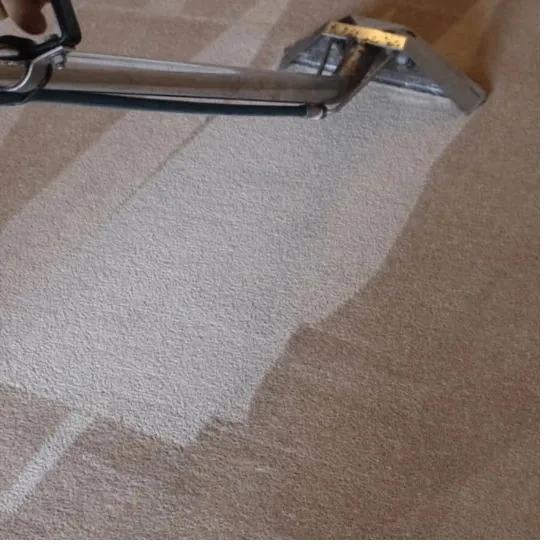
Removing salt requires dissolving it again with hot water and then extracting that water before it dries in place. That is precisely what hot water extraction does, and it is why entryways look and feel different after a proper clean in a way that vacuuming never achieves.
A useful test: run your hand across the entry carpet in late winter. If it feels gritty despite regular vacuuming, that grit is bonded salt and soil rather than surface dirt.
Matting Is The Cheapest Fix Available
And the one most people get wrong, because they buy for the doorway rather than for the walk.
Walk-off matting works by giving shoes enough contact to release what they are carrying. The variable that decides whether it works is length, not material, thickness or price.
The working minimum is roughly three strides of walking contact. A typical small mat at the door gives one footfall, sometimes not even that, which is why entryways with a mat often look no better than entryways without one.
What actually helps
- A long runner rather than a square mat. Length beats everything else.
- Matting outside as well as inside. Two shorter sections either side of the door outperform one inside.
- Shake it out weekly. A saturated mat stops absorbing and starts redistributing.
- A winter-only shoes-off rule. Not year round if that is unrealistic. December to March is where the damage happens.
None of this is expensive. It is the highest return-per-dollar intervention available for carpet in this climate, and it costs less than a single cleaning.
The February To March Window
Salt damage is cumulative, so how long it sits matters as much as how much arrives.
Salting in Erie typically runs from around December into March. Carpet cleaned in June has carried that salt through six months of foot traffic. Carpet cleaned in early spring, as soon as the salting stops, has carried it for weeks.
The clean itself is identical. The difference is entirely in how much abrasion happened before it. That is why we suggest booking early spring rather than waiting for the traditional summer clean, and it is genuinely the most useful piece of local timing advice on this site.
Erie is worse than the snowfall numbers suggest
Two local factors compound it. Freeze-thaw cycling means roads get treated repeatedly rather than once, so salt keeps arriving across the season. And lake humidity keeps indoor moisture high, which means hygroscopic salt in an entryway has plenty of ambient moisture to hold onto. A salted Erie entry stays damper than the same entry would inland.
What A Spring Clean Will And Will Not Fix
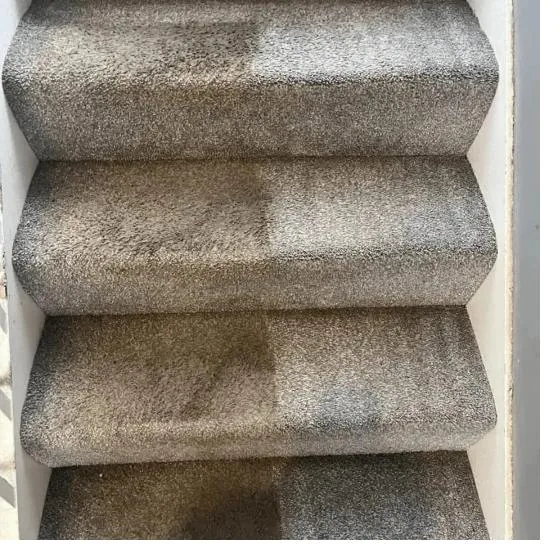
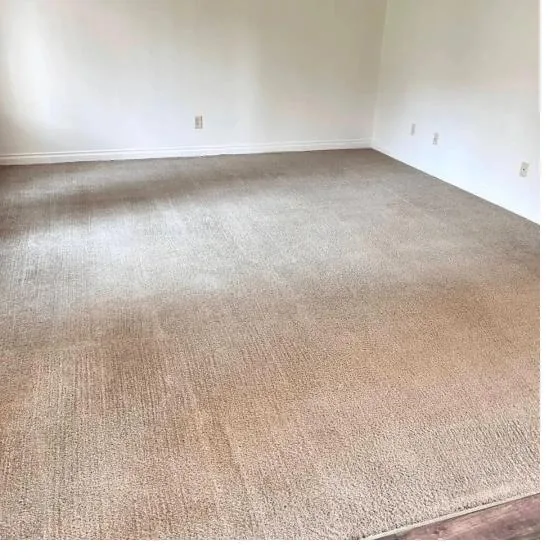
It will remove the chalky residue, the bonded salt in the fiber, the soil that salt has been holding, and the damp-and-musty condition that comes with it. Entryways usually improve more dramatically than any other area of the house.
It will not restore fiber that has already been abraded flat. Once salt and grit have physically worn the pile down, the carpet will be clean and still look tired, because there is no pile left to stand up.
The thumb test tells you which you have. Press firmly into the entry carpet and let go. Springs back means it is salt and soil, and cleaning will surprise you. Stays flat means the fiber is worn, and that is a replacement conversation rather than a cleaning one.
We would tell you which during the assessment rather than after taking the booking.
Common Questions
Does road salt actually damage carpet, or just stain it?
Both, and the damage matters more. Salt crystals are hard and angular, so every step grinds them against the fiber like fine sandpaper. The white residue is the visible part. The abrasion is the part that shortens carpet life, and it does not reverse.
Why does vacuuming not remove salt?
Because salt dissolves and recrystallises within the fiber rather than sitting loose on top. A vacuum lifts what is loose. Bonded salt needs dissolving with water and rinsing out, which is what extraction does.
Why does my entryway feel damp all winter?
Salt is hygroscopic, meaning it pulls moisture out of the air. A salted entry stays slightly damp even when nothing has been spilled, which is why those areas also hold soil and can develop a musty smell.
When is the best time to clean after winter?
As soon as the salting season ends, typically early spring in Erie. Salt left in the fiber from December through to a summer cleaning has months to abrade it. The clean is the same either way, the damage prevented is not.
What kind of matting actually works?
Length matters more than material. Matting needs roughly three strides of walking contact for shoes to release grit and salt. A small mat at the door looks like a solution but gives shoes barely one footfall, which does very little.
Will cleaning fix carpet that already looks worn from salt?
It depends whether the fiber is abraded or just dull. Press the pile with your thumb. If it springs back, most of what you are seeing is salt and soil, and it will clean up well. If it stays flat, the fiber has been worn down and cleaning will not restore it.
Is salt worse than ordinary dirt?
For carpet longevity, yes. Ordinary soil is mostly soft particulate. Salt and the grit that comes with it are hard and angular, and hardness is what determines abrasion. This is the same reason beach sand is so damaging.
Does this affect tile and grout too?
Yes, and often more visibly. Salt tracked onto entry tile settles into porous grout, holds moisture there and discolours it. It is the most common cause of grout discolouration we see in Erie entryways.
Book your spring clean early
The sooner after salting season, the less abrasion your carpet carries. Free estimate, no obligation.
Get My Free QuoteCall (877) 658-1206