
Low-Moisture Encapsulation Cleaning in Erie, PA
Low-moisture encapsulation in Erie cleans carpet using a fraction of the moisture of hot water extraction, so most areas are walkable within one to two hours. Built for condos, occupied offices and rental turnovers where nobody can lose a day waiting on carpet to dry.
Which Method Does Your Space Need?
Encapsulation is genuinely better for some jobs and genuinely worse for others. This tells you honestly which one you are.
Which Method Does Your Space Need?
Encapsulation is not always the right answer. Three questions tells you which method actually fits.
What Low-Moisture Encapsulation in Erie Actually Does
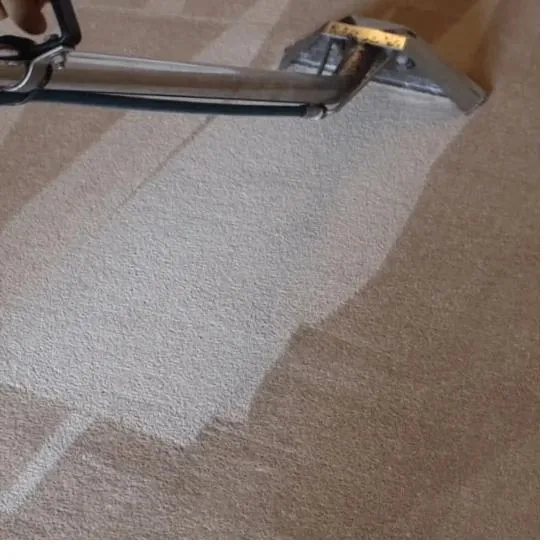
A polymer solution is applied to the carpet and worked in with a brush or pad machine. As it dries, the polymer surrounds each soil particle and crystallises around it.
Those crystals do not bond to the fiber. They sit loose, so the next vacuum pass lifts them out along with the soil trapped inside. The cleaning finishes when you vacuum, not when the technician leaves.
That is the key difference from hot water extraction, which flushes soil out with heated water and vacuums it away immediately. Extraction removes more in a single visit. Encapsulation uses a fraction of the moisture, which is why the carpet is usable again in about an hour.
The mechanism also explains its limit. Encapsulation deals with soil sitting in the pile. It does nothing for urine in the backing or pad, because there is nothing to crystallise down there.
Encapsulation Versus Hot Water Extraction
Neither is better overall. They do different jobs, and the honest answer depends on your space.
| Low-moisture encapsulation | Hot water extraction | |
|---|---|---|
| Dry time | Roughly one to two hours | Six to twelve hours with air movers |
| Soil removal | Good on light to moderate soil | Removes significantly more, including deep in the pile |
| Best for | Maintenance, occupied spaces, tight turnarounds | Restorative cleaning, heavy soil, pet treatment |
| Frequency | Monthly to quarterly | Once or twice a year |
| Pet urine | Not effective | The correct method |
| Disruption | Space stays largely usable | Needs a closure or overnight window |
The pattern that works best in practice is both: encapsulation on a regular cycle to keep traffic lanes from setting, with restorative extraction once or twice a year to pull out what has accumulated. Choosing one exclusively is where carpet care usually goes wrong.
Where Encapsulation Makes Most Sense
Condos and apartments
Smaller footprints where there is nowhere to go while carpet dries. Bayfront and downtown Erie units also sit in higher humidity, which makes long drying times genuinely inconvenient rather than just slow.
Occupied offices
Businesses that cannot close. Interim encapsulation keeps traffic lanes from setting between annual deep cleans, and staff are back on the carpet the same day.
Rental turnovers on a deadline
When the gap between tenants is measured in hours rather than days. Worth checking the lease first, since some agreements specify extraction.
Maintenance between deep cleans
The most sensible residential use. Extraction once or twice a year, encapsulation in between to hold the result.
Carpet tile and commercial glue-down
Glue-down carpet has no pad to absorb excess moisture, so lower moisture methods suit it particularly well.
Why Dry Time Matters More In Erie
Lake Erie keeps indoor humidity higher than inland Pennsylvania, particularly September through December. Higher ambient moisture means slower evaporation, so the same carpet that dries in six hours elsewhere can take considerably longer here.
That gap is where encapsulation earns its place. In a Bayfront condo or a below-grade family room, the difference between one hour and twelve is not a convenience question, it is whether the room is usable that day.
It also reduces the window where damp carpet can develop a musty smell, which is a real consideration in Erie basements and ground-floor units through the wet autumn months.
What Affects Your Price
- Total square footage
- Soil level, since heavier soil may need restorative work first
- Whether furniture needs moving
- Frequency, as recurring schedules cost less per visit than one-off bookings
- Access and timing, including after-hours work
- Whether it is paired with restorative extraction in the same programme
We confirm your price before starting. No published rates, because square footage alone does not tell us soil level or access, and those change the work.
When Encapsulation Is The Wrong Choice
We would rather turn a booking down than deliver a result we know will disappoint.
- Pet urine and odor. There is nothing in the pad for the polymer to crystallise. This needs enzyme treatment and extraction.
- Heavily soiled carpet. Carpet that has not been cleaned in years needs the soil physically flushed out first. Encapsulation on top of that under-performs.
- Water damage. Entirely different work involving extraction and structural drying.
- Matted and crushed pile. Where fiber has been physically flattened, no cleaning method restores it.
- Where a lease specifies extraction. Some rental agreements name the method. Check before booking.
If we arrive and find the space needs a different method than expected, we tell you before starting rather than proceeding and explaining afterward.
Encapsulation Cleaning Questions
How fast does encapsulation dry?
Most areas are walkable within one to two hours, compared with six to twelve hours for hot water extraction. That gap is the entire reason encapsulation exists, and in Erie where lake humidity slows evaporation it matters more than in drier climates.
Is it as effective as steam cleaning?
For maintenance cleaning on light to moderate soil, yes. For heavily soiled carpet, pet urine or restorative work, no. Encapsulation crystallises soil so it releases on the next vacuum, which is a different mechanism from flushing soil out with hot water. Each is better at a different job.
Can it be used on any carpet?
On most synthetics, yes. It works particularly well on commercial glue-down and carpet tile. Wool needs assessment first, and heavily matted carpet will not respond well to any low-moisture method.
How often should encapsulation be done?
More often than extraction, which is the point. Monthly to quarterly for commercial spaces depending on traffic, and every few months in a residential setting where it is used between deep cleans.
Does the residue attract dirt?
Not with modern polymers used at the correct dilution. The crystallised polymer is designed to release with vacuuming rather than staying tacky. Older-generation products and over-application did cause re-soiling, which is where the reputation came from.
Do I still need hot water extraction at all?
Most spaces benefit from restorative extraction once or twice a year alongside regular encapsulation. Encapsulation maintains, extraction restores. Using only one of them is where carpet care usually goes wrong.
Can you switch methods partway through a job?
Yes, and sometimes we recommend it. If we find heavier soil or pet contamination once we start, we tell you before continuing rather than delivering a result we know will disappoint.
Is it cheaper than steam cleaning?
Per visit it usually costs less because it is faster and uses less equipment. Over a year the comparison depends on frequency, since encapsulation is done more often. We give you a real figure for your space before starting.
Related Services
- Residential Carpet Cleaning
- Commercial Carpet Cleaning
- Pet Stain and Odor Removal
- Move-In and Move-Out Cleaning
- See all services
Available across Erie County: Erie city (16501, 16502), Millcreek (16505, 16506, 16509), Harborcreek (16421), Fairview (16415), North East (16428), Waterford (16441), Edinboro (16412) and Girard (16417).
Back on your carpet in about an hour
Free quote, honest method advice, and we say when extraction is the better call.
Get My Free QuoteCall (877) 658-1206Areas We Serve
Each area page covers what carpet in that part of Erie County actually deals with, from Presque Isle sand to well water iron.
Industry standards. Our technicians are certified by the IICRC, the Institute of Inspection, Cleaning and Restoration Certification, which sets the cleaning and restoration standards this industry works to. For independent guidance on indoor air quality and moisture, the US EPA publishes useful homeowner resources.